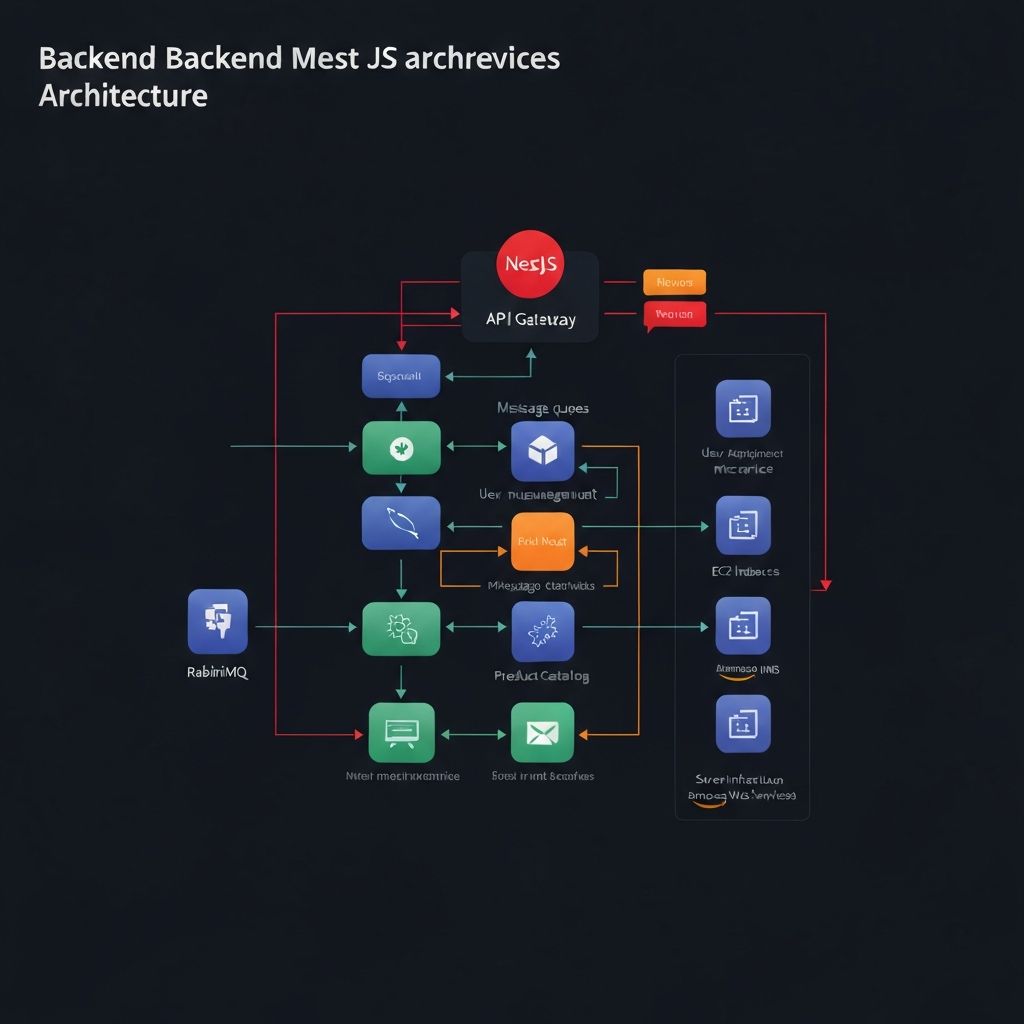
NestJS has emerged as one of the most popular frameworks for building scalable Node.js applications. Its modular architecture and built-in support for microservices make it an excellent choice for enterprise applications that need to scale horizontally.
Microservices Patterns in NestJS
NestJS provides first-class support for several microservices patterns including message-based communication, event-driven architecture, and request-response patterns. Each pattern has its use cases and trade-offs.
- CQRS: Separate read and write operations for better scalability
- Event Sourcing: Store events instead of state for complete audit trails
- Saga Pattern: Manage distributed transactions across services
Inter-Service Communication
NestJS supports multiple transport layers for microservices communication including TCP, Redis, NATS, MQTT, RabbitMQ, and Kafka. Choosing the right transport depends on your requirements for reliability, performance, and message ordering.
"The choice of message broker is often less important than how you handle failures and retries in distributed systems."
Deployment Strategies
Deploying microservices requires careful consideration of service discovery, load balancing, and health checks. Kubernetes has become the de facto standard for orchestrating microservices, and NestJS applications integrate well with Kubernetes patterns.
Key deployment considerations include:
- Container orchestration with Kubernetes or Docker Swarm
- Service mesh integration with Istio or Linkerd
- Observability with distributed tracing and centralized logging
- CI/CD pipelines for automated testing and deployment
Conclusion
NestJS provides a solid foundation for building microservices-based applications. By leveraging its built-in patterns and integrations, teams can focus on business logic rather than infrastructure concerns. The key is to start simple and add complexity only when needed.